Your skin should feel clearly warm, never hot. If you want to pull away, it’s too hot. For most people that means the lowest setting, through a cover.
The numbers on the box confuse people, so here’s what they mean.
Pad temperature is not skin temperature
When a pad lists a range like 30–65°C, that is the temperature of the heating element or pad surface. Your skin receives less than that, because the cover, any towel and your clothes all sit in between, and your blood carries heat away from the skin as it arrives.
That is why you should never use a pad without its cover. The cover is part of how the pad is meant to deliver heat. See how to wash and care for it.
The warmth that helps
Muscles relax and blood flow increases when your skin warms to roughly 40–45°C. Above about 45°C, most people start to feel heat as pain. That pain is your skin warning you. The window between “helpfully warm” and “starting to damage” is narrow, a few degrees.
| How it feels | What to do |
|---|---|
| Barely warm | Give it 5 more minutes before turning it up |
| Comfortably warm, like a warm shower | Right |
| Hot, you keep wanting to lift the pad | Turn it down or add a towel layer |
| Stinging or burning | Take it off now |
Which setting to use
Start on the lowest setting every time. Give it 5–10 minutes to warm up fully. Most people find low enough for a stiff neck, back or period cramps.
Use a higher setting only for short sessions, only with the cover on, and only if you have normal feeling in the area. Thicker areas like the lower back and thighs handle more warmth than bony areas like the spine, shoulder blades and knees.
Stick to low, always, for older adults, anyone with diabetes, and anyone who might doze off.
Three things that make a pad hotter on your skin
- Pressure. Lying or leaning on the pad squeezes blood out of the skin, so heat builds up. The same setting feels far hotter underneath you than on top of you.
- Time. Skin can burn at around 44°C if contact lasts for hours. See how long to use a heating pad, and toasted skin syndrome for what months of daily use does.
- Heat rubs. Menthol or capsaicin creams make the skin more sensitive. Don’t combine them with a pad.
What “constant temperature” means
Better pads hold the temperature you set instead of cycling between too hot and too cool. A microwaveable pack does the opposite: it starts very hot and cools quickly, so the first few minutes carry the most burn risk. With an electric pad, steady warmth makes it easier to stay in the helpful range for the whole session. The comparison is here: electric vs microwave vs stick-on heat packs.
Don’t use heat if…
You can’t feel temperature well in the area, the skin is broken, or the injury is fresh and swollen. Full list: who should not use a heating pad.
If you’re still choosing one, the pads that hold a steady setting are covered in the best heating pad in Singapore.
The heat pad we use
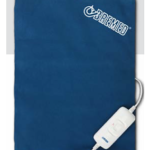
We’ve supplied the Bremed BD7800 since 2010. It holds a steady temperature, covers a whole lower back and has a machine-washable cotton cover. Physiotherapy clinics in Singapore use it with their patients.
Clinically reviewed by: Nigel Chua (Hand Occupational Therapist) & Louise Yow (Physiotherapist). This article is general information, not a diagnosis. electricheatpad.com sells electric heat pads.