Almost everyone grew up with a hot water bottle. It’s cheap, needs no socket, and it works. So is there any reason to spend more on an electric pad?
Side by side
| Hot water bottle | Electric pad | |
|---|---|---|
| Upfront cost | Very low | Higher |
| Running cost | Boiling water each time | A few cents |
| Temperature | Hottest at the start, cools throughout | Held steady |
| How long it lasts | 1–2 hours, fading | As long as it’s plugged in |
| Needs a socket | No | Yes |
| Setup each time | Boil, fill, burp the air out | Switch on |
| Main risk | Scalds from splits and spills | Burns from long use |
| Lifespan | Replace every 2–3 years | Several years |
The figures behind two of those rows: what a pad costs to run and how long one lasts.
The temperature problem
A hot water bottle gives you its hottest moment first, when the bottle is freshly filled and your skin hasn’t adjusted. It then cools for the rest of the session. So the first minutes carry the most burn risk, and the last minutes carry the least benefit.
An electric pad sits in the useful range the whole time. For a stiff back where you want 20 solid minutes of warmth before you move, that’s the practical difference.
Using a hot water bottle safely
If you’re sticking with one, these matter:
- Hot water, not boiling. Let the kettle stand for a few minutes. Boiling water degrades the rubber and scalds badly if it escapes.
- Fill two-thirds, then press out the air before sealing.
- Always use a cover, or wrap it in a towel.
- Check the date stamp. There’s a small flower-shaped mark on the neck showing the manufacture date. Replace the bottle every two to three years, sooner if the rubber looks cracked, cloudy or perished.
- Inspect before every fill. Cracks and worn seams are how splits happen.
- Don’t sit or lie on it. Pressure is what makes old bottles burst.
- Don’t take it to bed for children or older adults. Hot water bottle scalds are a well-known cause of burns in both groups. See heat pads and children and buying one for a parent.
An electric pad has no scald risk, but it has its own rule: never sleep with it on. See is it safe to sleep with a heating pad on? Over months of daily use on one spot, both can leave a lasting skin stain.
Where each one wins
Hot water bottle: occasional use, no socket nearby, moulding around an awkward shape, warming a bed before you get in, and when budget is the deciding factor.
Electric pad: daily or near-daily use, a long-term problem like arthritis or chronic back pain, warming up before exercises, using it at a desk, and any situation where a steady temperature matters.
A note on the microwave version
Microwaveable wheat or gel bags sit between the two: portable like a bottle, no scalding water, but the same falling temperature and a real risk of overheating if you microwave them longer than instructed. See electric vs microwave vs stick-on heat packs.
The short answer
If you use heat once in a while, keep the bottle and replace it when the rubber ages. If you’re using heat several times a week for something ongoing, a pad is steadier, safer and cheaper over time.
If that’s you: the best heating pad in Singapore and where to buy one.
The heat pad we use
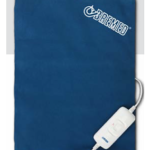
We’ve supplied the Bremed BD7800 since 2010. It holds a steady temperature, covers a whole lower back and has a machine-washable cotton cover. Physiotherapy clinics in Singapore use it with their patients.
Clinically reviewed by: Nigel Chua (Hand Occupational Therapist) & Louise Yow (Physiotherapist). This article is general information, not a diagnosis. electricheatpad.com sells electric heat pads.