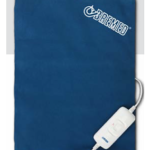
Heat is one of the few things patients will reliably do at home.
It’s cheap, it’s under their control, it’s comfortable as long as you’re careful, and they already believe in it. That makes it useful as a bridge between sessions, provided the instructions are specific enough to be safe.
Below is a template you’re welcome to adapt for your own patient handout. Our patient-facing guides are also free to print.
Screen before you prescribe
Four questions before you recommend home heat:
- Is sensation intact over the target area? Test it if there’s any doubt: diabetes, neuropathy, post-stroke, post-surgical.
- Is this an acute inflammatory presentation? Swelling or warmth within 48–72 hours means cold, not heat.
- Is the skin intact, and is there any vascular concern? Wounds, infection, severe PVD, suspected DVT, lymphoedema.
- Can this patient remove the heat source and report discomfort? This catches cognitive impairment, sedating medication and the patient who will absolutely fall asleep on it.
Extra caution in older patients with thin skin and anyone with diabetes. The full screen is in who should not use a heating pad.
A handout template
Fill the bracketed parts per patient and keep the rest fixed.
Using heat at home
Where: [area]
How long: [15–20] minutes
How often: [2–4] times a day
When: [before your exercises / in the morning / after work]
Every time:
- Keep the cover on, plus a layer of clothing
- Use the lowest setting that feels clearly warm, never hot
- Rest the pad on top of you. Don’t lie on it
- Set a timer
- Do your exercises straight afterwards, while you’re warm
- Check your skin afterwards
Stop and tell me if: the skin goes blotchy red, white or blistered, or the area is more painful afterwards.
Never: sleep with it on. Never use it over a heat rub or medicated patch.
What heat does: it makes the area easier to move for a while. It doesn’t heal the problem. The exercises do the work.
The patient-side version of the same instructions, if you’d rather send a link than a sheet: “my physio said use heat” — but how, exactly? and your first week with a heat pad.
Three things worth saying out loud
“Heat is the warm-up, not the treatment.” Without this, some patients substitute heat for their programme and report that they’ve been doing their rehab.
“Warm, not hot.” Patients equate more heat with more benefit. Naming the target sensation prevents the setting creeping up.
“Don’t fall asleep on it.” The single most useful sentence, especially for older patients and anyone using it in the evening.
Documenting it
Record that you screened for contraindications, the specific parameters you gave, that you provided written instructions, and the safety advice covered. It takes a line and it’s the record you’d want if a patient burns themselves.
Reviewing it
At the next session, ask what they actually did rather than whether it helped. You’ll find people leaving it on for an hour, using it in bed, or not using it at all.
Also worth checking at review: daily use over months warrants a skin check for erythema ab igne, and a patient who needs heat every day for weeks may need their problem reconsidered rather than their heat schedule extended.
Guides you can print
- Heat or ice? A physio’s decision guide
- Who should not use a heating pad
- How long should you use a heating pad?
- Is it safe to sleep with a heating pad on?
- Heating pads and diabetes
On the evidence behind heat: what the evidence says. If you’re comparing in-clinic modalities, see hydrocollator vs electric heat pads and infection control for heat packs. Clinics can order the BD7800 at trade prices: bulk orders for clinics, or contact us.
Clinically reviewed by: Nigel Chua (Hand Occupational Therapist) & Louise Yow (Physiotherapist). This article is general information, not a diagnosis. electricheatpad.com sells electric heat pads.