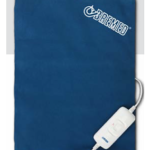
Most physiotherapy departments still run a hydrocollator. It’s traditional, patients like it, and nobody questions it. But if you’re fitting out a new room, replacing an ageing unit, or running several sites, the comparison with electric pads is worth doing properly.
We stock electric pads, so weigh this accordingly. The categories below are the ones to compare regardless of what you decide.
The comparison
| Hydrocollator | Electric pads | |
|---|---|---|
| Upfront cost | Tank plus packs plus covers | Per pad, far lower |
| Running cost | Tank heated continuously, often 24/7 | Only while in use |
| Set-up per patient | Retrieve pack, wrap in towelling layers | Plug in, place, set |
| Temperature through session | Starts hot, cools steadily | Held steady |
| Laundry | Multiple towel layers per use | One washable cover |
| Maintenance | Draining, descaling, water changes, pack replacement | Inspect cords, replace pads |
| Portability | Fixed to one room | Moves between rooms |
| Burn risk profile | Highest in the first minutes; depends on correct wrapping | Rises with duration; depends on time limits |
The hidden cost is staff time
Retrieving a pack, wrapping it correctly and returning it afterwards takes a few minutes per patient. Multiply by your daily heat applications, then by your sites, and it becomes a real number. Work it out for your own clinic rather than trusting a general figure, because it varies with room layout and how the treatment is delivered.
The laundry load follows the same pattern. Hydrocollator towelling is bulky, and damp towels turned around several times a day add up. On the other side of the ledger, what an electric pad costs to run and how long one lasts are both small, known numbers.
Infection control
Water tanks need a documented cleaning schedule: regular draining, descaling and refilling, with records. Standing warm water is the concern, and manufacturers publish intervals for this.
Electric pads shift the issue to the cover: a removable, machine-washable cover changed between patients, plus wipe-down of the pad surface with a product compatible with the material. Simpler to audit, but only if you actually stock enough covers to change them. Detail here: heat pack infection control in clinics.
Whichever you use, write it into your cleaning schedule rather than leaving it to habit.
Clinical considerations
- Moist vs dry. Hydrocollator packs deliver moist heat, which transfers slightly faster. The practical difference over a standard application is small. See moist heat vs dry heat.
- Contouring. Packs mould well around a shoulder or cervical spine. Flat pads suit the lumbar spine and larger areas better; see the size guide.
- Temperature control. A pack’s temperature falls through the session and can’t be adjusted. An electric pad holds a set level, which is easier to standardise across clinicians.
- Burn risk. Both carry it. With packs the risk concentrates in the first minutes and depends on correct layering. With pads it accumulates with time on skin, so duration limits and skin checks are the control. Screen against the contraindication list, particularly neuropathy.
On whether heat before hands-on work earns its place in the session at all: the evidence for heat before manual therapy.
The home-care continuity point
The strongest practical argument for pads is continuity.
If you apply moist heat in clinic and the patient uses an electric pad at home, they’re getting something different from what you demonstrated. Using the same modality means the instructions you give, the timing and the skin checks all transfer directly.
It also makes heat something the patient does daily between sessions rather than something they receive once a week. Two things to hand them: the home heat prescription handout and your first week with a heat pad.
A middle path
Most clinics that have moved don’t remove the tank.
They use electric pads for routine application and home-care teaching, and keep the hydrocollator for cases where contouring or moist heat is preferred. That spreads the running cost and keeps the option open.
If you want to work it out
Track for two weeks: heat applications per day, minutes of staff time per application, towel loads attributable to heat, and your tank’s electricity draw. Compare against pad cost, expected lifespan and cover laundry. It’s a small audit and it settles the question with your own numbers.
Clinics can order the BD7800 at trade prices, and you’re welcome to print our patient safety guides as handouts. See bulk heat pads for clinics in Singapore, or contact us.
Clinically reviewed by: Nigel Chua (Hand Occupational Therapist) & Louise Yow (Physiotherapist). This article is general information, not a diagnosis. electricheatpad.com sells electric heat pads.